071 182 8667Call for plant hire support 💬WhatsApp Project Plant HireFast equipment enquiries dustin@projectplanthire.co.zaSend your equipment list
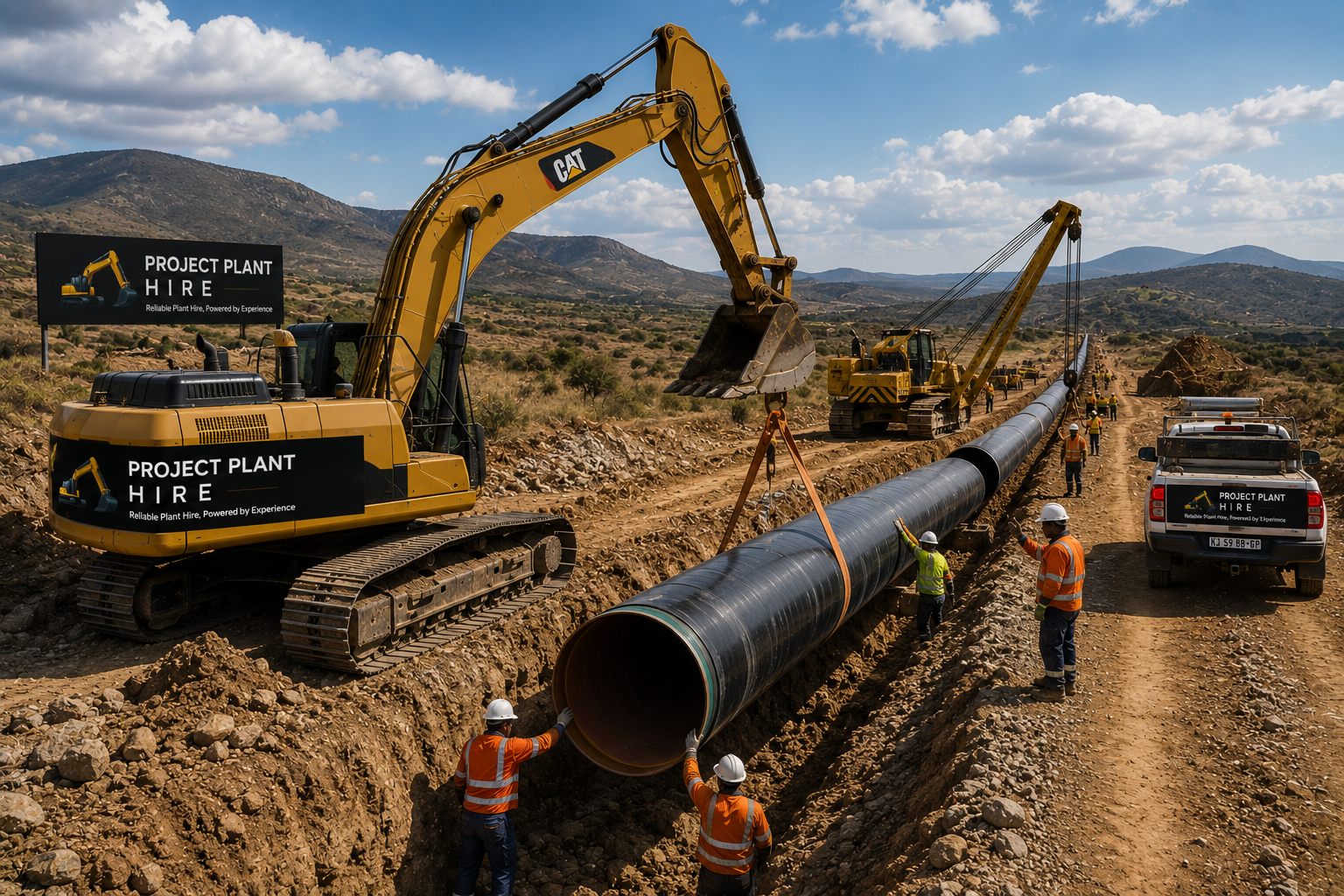
Pipeline Construction Plant Hire

Pipeline Construction Equipment Hire South Africa

Equipment hire for water pipelines, sewer lines, stormwater, HDPE, steel pipe, trenching, bedding, backfilling and reinstatement works.

Wet & Dry HireHeavy EarthmovingProject SupportSouth Africa
Pipeline Construction Equipment Hire South Africa
Overview

Pipeline Construction Equipment Hire South Africa for Real Project Conditions

Pipeline construction is a sequence-driven activity. The project moves from clearing and setting out to trenching, bedding, pipe laying, backfilling, compaction and reinstatement. The equipment must support that sequence without creating delays between crews.

Excavator size is usually selected around trench depth, reach, pipe diameter, ground conditions and production rate. Smaller excavators and TLBs support services, crossings and restricted areas, while larger excavators handle deeper trenches and bulk spoil. Rollers and water bowsers become important during backfilling and reinstatement.

Project Plant Hire supports pipeline contractors with plant for municipal services, bulk water pipelines, sewer upgrades, stormwater lines, industrial pipework, road crossings and rural pipeline projects.

Recommended Fleet

Equipment Commonly Used for This Industry

These machines are selected because they support the actual work sequence, productivity requirements and site conditions for this type of project.

Fleet Workflow

How the Equipment Works Together

Excavators open the trench and place spoil safely.
Tippers remove excess material or deliver bedding.
Pipe crews install pipe, fittings and bedding.
TLBs and excavators backfill in controlled layers.
Water bowsers and rollers compact reinstatement areas and road crossings.

Equipment Selection Guide

  • Choose excavator size based on trench depth, reach and pipe diameter.
  • Use smaller machines for tie-ins, live services and confined sections.
  • Plan spoil handling early to avoid blocking the pipeline corridor.
  • Use telehandlers or loaders where pipe and palletised materials must be moved regularly.
  • Select rollers based on reinstatement width and material type.

Safety, Planning & Compliance

  • Pipeline trenches require trench safety, edge protection, service locating and controlled access.
  • Working near live services requires careful digging methods and competent supervision.
  • Road crossings require traffic management, reinstatement quality and compaction control.

Areas Served

Project Plant Hire supports equipment sourcing for projects across Gauteng, North West, Mpumalanga, Limpopo and the Free State, subject to fleet availability, mobilisation distance and project requirements.

For larger projects, send the machine list, site location, expected duration and whether operators are required so the correct fleet can be quoted.

FAQs

Frequently Asked Questions

What excavator is best for pipeline trenching?

20 ton excavators are common for general trenching, while 30 ton machines may be required for deeper or larger pipeline work.

Can TLBs be used on pipeline projects?

Yes. TLBs are very useful for backfilling, support work, smaller trenches and clean-up.

Do pipeline projects need rollers?

Yes. Reinstatement, road crossings and backfilled layers often require compaction equipment.

Can you support municipal pipeline work?

Yes. Equipment can support water, sewer, stormwater and service upgrade projects.

Need equipment for a project?

Send your project location, machine requirements, expected duration and whether you need wet or dry hire. Project Plant Hire will help source the right equipment combination.

Request a Quote →
Call WhatsApp Quote